
Tree services
Land clearing removes trees, stumps, brush and roots so a lot can be built on, farmed, fenced or opened up. Newcomb's Tree Service clears house lots, additions, driveways, septic areas and acreage for owners and builders across the South Shore.
Clearing a lot is more than cutting trees. Someone has to mark what stays and what goes, drop the timber safely, pull or grind the stumps, and get rid of a large pile of wood and brush. On a building lot the ground often needs rough grading afterward so the foundation crew, septic installer or paver can start. The scope can be small, like a backyard corner for a pool or shed, or it can cover several wooded acres ahead of a new house.
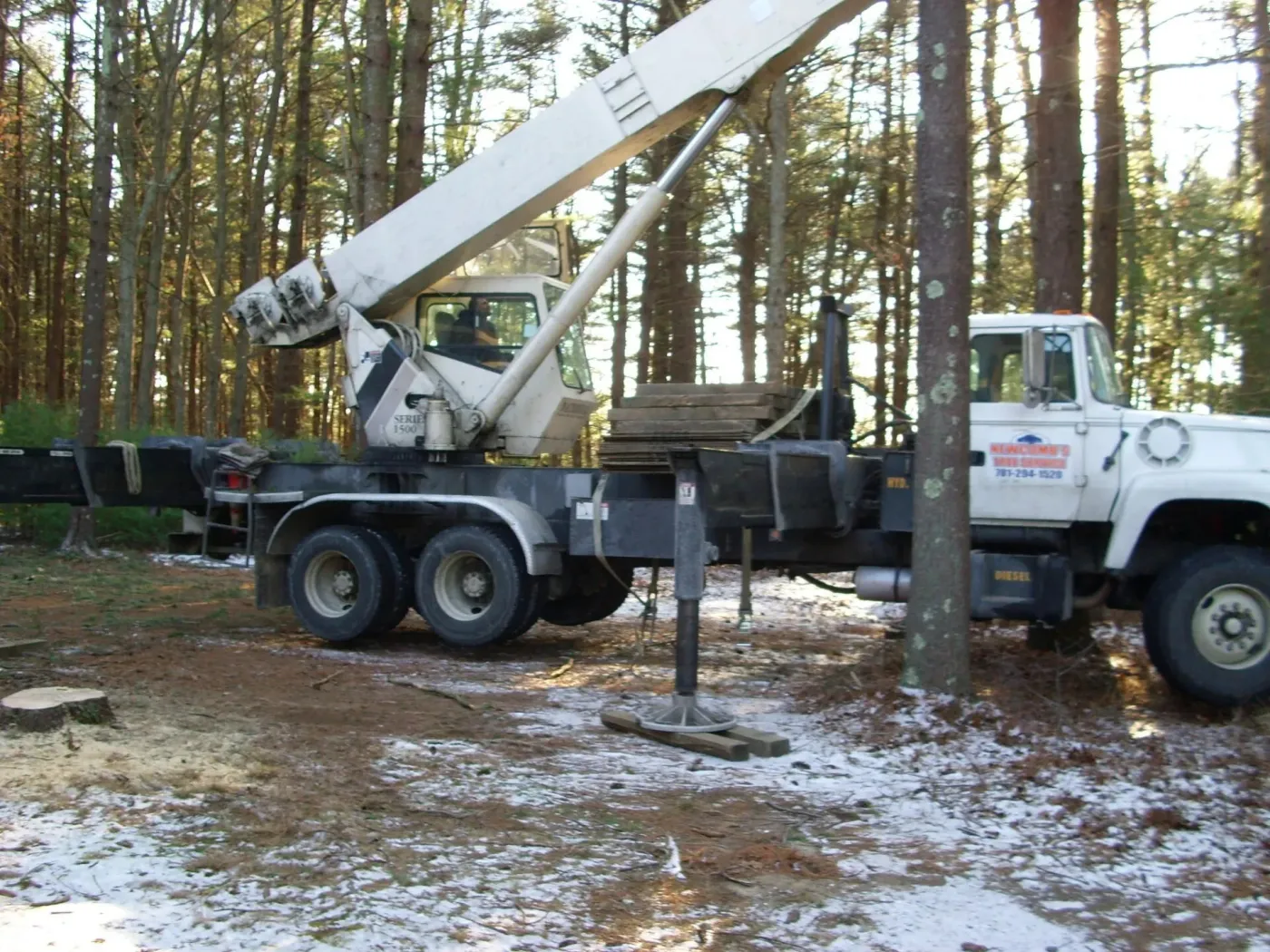
Newcomb's has been doing this work since 2000 with its own equipment. Crews fell and cut up the trees, and our 45-ton and 110-ton cranes lift out the ones that lean over a neighbor's house or wires. Excavating equipment handles stumps and roots, and our tub and horizontal grinders turn brush and stumps into chips. Log trucks haul the timber to our yard on Industrial Drive in Halifax, where the wood is recycled. Cutting, digging, grinding and trucking all come from one company.
South Shore lots tend to be a mix of eastern white pine, pitch pine, red oak and red maple, often with thick undergrowth. Sandy soil in much of Plymouth County makes stump pulling easier, but low ground can be wet and soft, which limits when heavy machines can work. Many parcels here sit near wetlands, cranberry bogs or ponds. Work close to those areas may need Conservation Commission review before any cutting starts, so check with your town early. Trees along the street may also be public shade trees under the tree warden.
Expect trucks and machines on site, so plan where they can enter and park. We walk the lot with you first and confirm the clearing limits and any trees you want to keep. Cutting usually comes first, then stumps, then grinding and hauling. It is loud, and the ground will look rough until grading is done. When we leave, the cleared area is free of logs, brush and stumps unless you asked to keep firewood or chips. Your builder or installer can then move in.
How it works
From first call to clean yard
01
Site walk and estimate
We meet you at the property, walk the boundaries, talk through your plans and give you a free estimate for the clearing.
02
Marking and permits
You or your builder secure any town approvals. We flag the clearing limits and the trees that stay before a saw is started.
03
Cutting and stump removal
Crews drop and cut up the trees, then pull or grind stumps. Cranes handle anything that cannot be felled safely in the open.
04
Grinding, hauling, grading
Brush and stumps are ground or trucked out, logs go to our yard, and the ground is rough graded if that is in your scope.
Pricing
What affects the price
Acreage and tree density
A lightly wooded half acre takes far less time than several acres of mature pine and oak. We look at how many trees there are and how large they have grown.
Stumps and roots
Cutting trees flush costs less than pulling every stump. Building lots, driveways and septic areas usually need full stump and root removal, which adds machine time and material to haul.
Access for equipment
Trucks, excavators and grinders need a way in. A lot with road frontage and firm ground is simpler than one reached by a narrow drive or across soft soil.
Hauling versus grinding
Wood can be chipped or ground on site, left for you as firewood or chips, or trucked to our yard. The amount that leaves the property affects the trucking cost.
Wetlands and obstacles
Clearing near wetlands, wires, buildings or a neighbor's fence takes more care and sometimes a crane. Permit conditions set by the town can also shape how the work is done.
Reviews
What customers say
Two huge, elderly Norway Maples sadly had to be taken down before they came down on their own. They were in front of my home and street adjacent. Not an easy removal. Newcomb’s Tree Service was professional in every aspect and reasonably priced.
The crew was hard working, friendly and efficient. By far the fairest price of anyone on the South Shore.
The tree service provided was exceptional. The team was out a few times to make sure they had the right equipment for the job. I barely knew they were here. Thank you!
Questions
Land Clearing & Excavating FAQ
It depends on the town and the lot. Work near wetlands, streams or ponds may need Conservation Commission review, and trees along a public road may be public shade trees under the town tree warden. Some towns have their own clearing rules. Call your town hall before you schedule, and we can work to whatever conditions they set.
The time depends on the size of the lot, how many trees stand on it, whether stumps are being pulled, and how easily machines can get in. Weather and soft ground can slow things down too. After we walk your property we can tell you how long to plan for, so your builder can schedule around us.
We do not leave piles behind for you to deal with. Logs are trucked to our yard on Industrial Drive in Halifax, and brush and stumps are ground into chips. That wood is recycled, and recycled wood is what our mulch is made from. If you want to keep logs for firewood or a pile of chips, tell us at the estimate.
Yes. Selective clearing is common, and it is usually worth keeping healthy shade trees away from the building area. We flag the trees to save during the walkthrough and work around them. Keep in mind that trees left at a new clearing edge get more wind than before, so we may suggest removing ones that are weak or leaning.
It can, and for most building lots it should. Foundations, driveways and septic systems need stumps and large roots out of the ground. For a view, a pasture or a larger yard, grinding stumps below grade or cutting them low may be enough. We spell out in the estimate which approach is covered so there is no confusion later.
Land Clearing & Excavating near you
We cover every town within about 30 miles of Halifax.
Ready for a free estimate?
Call the office or send a photo of the tree. You get a written price before any work starts.