Tree services
Title 5 tree removal clears the trees, stumps and roots that stand in the way of a septic system repair or replacement under Massachusetts Title 5. Homeowners, sellers and septic installers call us when a system has to go in where trees are growing.
A new or repaired septic system needs open ground. The tank, the distribution box and the leaching area all have to be excavated, and the installer's machines need a way in. Trees growing on or beside that footprint have to come out first. In many cases so do their stumps, because large roots and septic excavation do not mix. The work often comes with a deadline. A failed inspection during a home sale, or a system that has stopped working, leaves little room for delay.
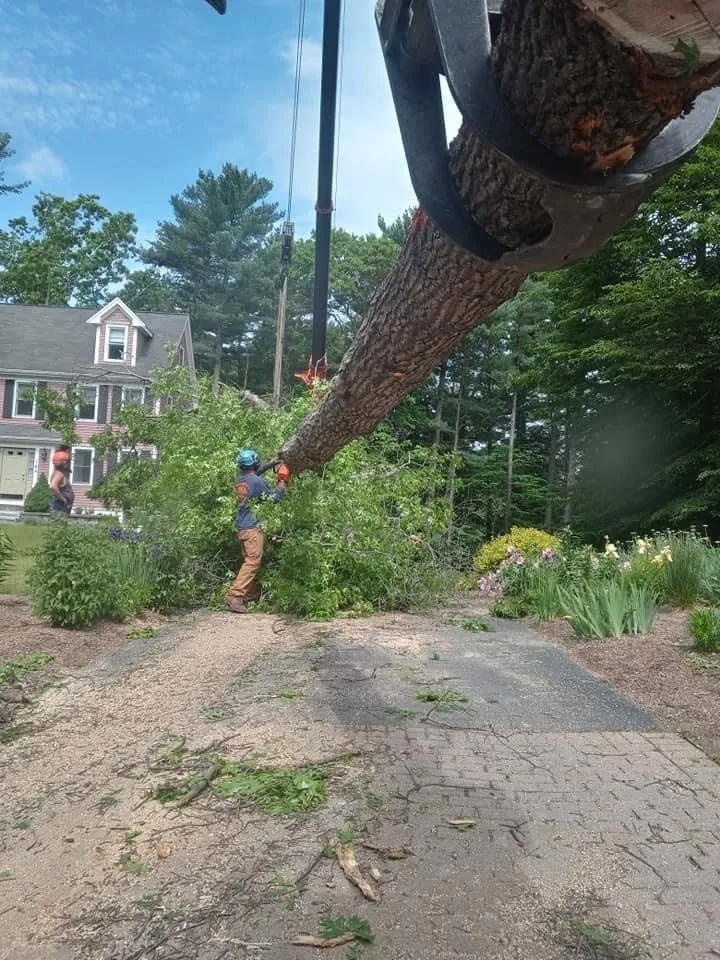
We work from the septic plan. Your installer or engineer marks the area to be cleared, and we coordinate with the installer on which trees go, whether stumps are ground or pulled, and when the site has to be ready. Removal is done with climbers, bucket trucks or one of our own cranes when trees stand close to the house. Because Newcomb's also does land clearing and excavating, stumps can be dug out and hauled, not only ground. Wood, brush and stumps go to our Halifax yard for recycling.
Many South Shore homes rely on septic systems, and many of those lots are wooded. Systems were often set in the one open patch of the yard, and white pine, red oak and red maple have since grown up around them. Maple and pine roots spread wide and shallow. Lots near ponds, bogs and wetlands add another layer, since work close to those areas may need Conservation Commission review. Sandy or wet soils also influence where the installer can place the new system, which in turn decides which trees are affected.
Expect a site meeting first, ideally with the installer present or the plan in hand. We give you a free estimate for the tree portion. On clearing day the crew takes down the marked trees, deals with stumps as agreed and removes the debris so the excavator can start. We follow the installer's direction on where heavy trucks can and cannot go. After the system is in, we can return for trimming, extra stumps or cleanup. Questions about the regulation itself belong with your installer, engineer or local Board of Health.
How it works
From first call to clean yard
01
Review the plan
Send us the septic plan or connect us with your installer. We confirm the limits of clearing on site.
02
Estimate and schedule
You receive a free estimate for the tree work, and we set a date that fits the installer's start.
03
Clear the area
Marked trees come down, stumps are ground or removed as agreed, and wood and brush are hauled away.
04
Hand off the site
We confirm with the installer that the area is ready for excavation, and return later if more clearing is needed.
Pricing
What affects the price
Number and size of trees
The count, height and trunk diameter of the trees inside the marked area set most of the price. A few saplings and a stand of mature pines are different jobs.
Stump handling
Grinding stumps, digging them out or leaving them for the installer's excavator are three different scopes. The installer's requirements decide which one applies to your site.
Access and proximity
Trees close to the house, the existing tank or overhead wires need sectional or crane removal. Open areas with room for trucks clear faster.
Timing with the installer
Clearing everything in one visit ahead of the excavator is most efficient. Split visits or late changes to the cleared area add trips and time.
Debris removal
Hauling all logs, brush and stumps off site is more work than leaving wood for your own use. Tell us what you want kept, if anything.
Reviews
What customers say
The crew was hard working, friendly and efficient. By far the fairest price of anyone on the South Shore.
The tree service provided was exceptional. The team was out a few times to make sure they had the right equipment for the job. I barely knew they were here. Thank you!
Fantastic work. Fast, efficient, added some extra trees to the quote the day of for a reasonable price. All in all, would definitely use them again.
Questions
Title 5 Septic Tree Removal FAQ
Usually the ones within the work area do. The installer has to excavate for the tank and leaching area and needs room for machines, so trees and stumps on that footprint come out first. Which trees are affected depends on the plan for your lot. Your installer or engineer marks the limits, and we clear to those marks.
Yes, roots are a known cause of septic trouble. They grow toward moisture and can enter pipes, tank seams and the leaching area, where they slow or block flow. Whether roots are the reason your system needs work is for your septic inspector or installer to determine. If trees have to go as part of the fix, call us.
A tree service does the clearing, working to the limits set by the septic installer or engineer. Some homeowners hire the tree company directly, and some installers bring one in. Newcomb's does this work both ways and coordinates with the installer so the right trees come out and the site is ready when the excavator arrives.
That is the installer's call. Where the tank or leaching area will be excavated, stumps and large roots often need to come out entirely. Outside the excavation, grinding may be enough. Newcomb's can grind stumps, dig them out or leave them for the installer's excavator, and we haul stumps to our yard for recycling.
Timing depends on the number of trees and on our schedule, so call as soon as you know clearing is needed. We understand that a failed inspection often comes with a closing date attached. Send us the septic plan or put us in touch with your installer, and we will give you a free estimate and a realistic date.
Related services
Title 5 Septic Tree Removal near you
We cover every town within about 30 miles of Halifax.
Ready for a free estimate?
Call the office or send a photo of the tree. You get a written price before any work starts.